
New book on literacy
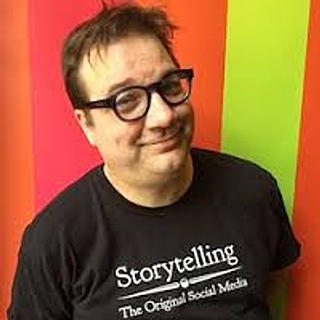
I'm Excited to Announce My New Book!
After more than fifteen years of teaching literacy courses, working with future educators, and exploring what truly helps students become stronger readers, I am thrilled to share my newest book:
Unlock the Power of Disciplinary Literacy: A Practical Guide to Teaching Within Your Content Areas

This book is written for educators, pre-service teachers, literacy leaders, and anyone interested in helping students read more effectively across the core disciplines of mathematics, language arts, science, and social studies.

One of the biggest misconceptions in education is that reading is the same in every subject. Research—and classroom experience—tell us otherwise.
Think about it:
🔬 A scientist reads to investigate evidence and discover patterns.
📜 A historian reads to examine perspectives, bias, and context.
➗ A mathematician reads symbols, diagrams, and logical relationships.
📖 A literary reader explores character, theme, and meaning.
When we teach students to approach each discipline as experts do, we give them more than reading skills—we give them access to deeper understanding.

From the book, (Chapter Three)
"Too often, students disengage not because the content lacks relevance, but because the delivery of that content fails to mirror the authentic work of the discipline. When students are reduced to passive consumers—filling out worksheets, copying definitions, completing isolated tasks—they aren’t doing the discipline. They’re rehearsing information for short-term recall, not long-term understanding.
Let’s be clear: worksheets are not the problem—what they ask students to do is what many call worksheets, I refer to as recall sheets—tasks focused solely on memorization and regurgitation. True disciplinary engagement happens through what I call interactive pages—tools that prompt students to explore, apply, question, and connect new information. If a science worksheet simply asks students to name the layers of the Earth, it’s not disciplinary literacy. But if it invites students to apply those layers to real-world geological phenomena or asks, What would happen if tectonic activity stopped? that’s a different kind of cognitive work. That’s “doing the science.”
In math, the same principle holds. Assigning problem sets without unpacking the logic, strategies, and multiple pathways for solving them reduces math to answer-hunting. It leaves behind the essence of mathematics—reasoning, problem-solving, and pattern recognition. When teachers guide students to explain their process, test solutions, and consider why a strategy works, they’re helping students do the work of mathematicians.
Students want to be challenged. They want to see purpose. But they need us to create that connection. Assigning a reading or worksheet isn’t enough. We must plan for what students do with the content—and that means inviting them to step into the mindset of the discipline."
I know my blogs are usually about story and this book definitely connects story to literacy.

Throughout this book, I share practical strategies, classroom applications, and examples from real teaching experiences. And because those who know me know that I believe deeply in the power of story, each chapter also explores how storytelling can elevate learning and engagement in every content area.
The first chapter is available online, and the book can be purchased here:
📘 Kendall Hunt:https://he.kendallhunt.com/product/unlock-power-disciplinary-literacy-practical-guide-teaching-within-your-content-areas
📘 Amazon:https://www.amazon.com/-/es/Kevin-Cordi/dp/B0GVPQMB4K (We want to increase the rankings, we invite you to check it out but purchase at the publisher site. The ebook is priced lower if you read ebooks.)
If this message resonates with you, I would be grateful if you shared it with a teacher, literacy advocate, professor, or anyone who believes that reading can open doors to learning.
Thanks for sharing your stories. Read on! Tell on! Pass the word.
Thanks


Comments